Why Tensile Strength Matters in Spring Manufacturing
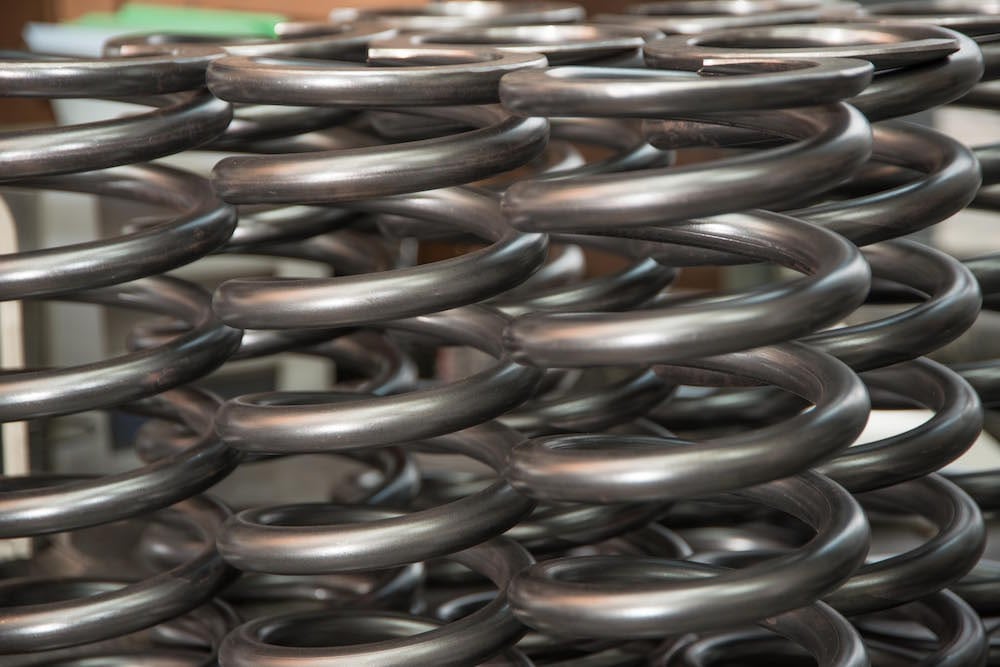
One of the most fundamental factors of spring design is the tensile strength — resistance to breaking down under tension — of the material.
Tensile Strength in Spring Design
In compression spring design, for example, the spring’s resistance to being compressed is its “compressive strength,” while its “tensile strength” is its resistance to breaking due to stress. In extension spring design, tensile strength would be measured by the spring materials resistance to being pulled apart.
Balancing Cost and Tensile Strength
No matter how much stress is applied to springs in your application, its tensile strength is integral to maintaining functionality as well as increasing the life expectancy of your springs. The longer your springs last, the more cost effective they ultimately are.
The other factor involved in spring cost is weight savings. The less materials used in a spring, the less it will cost. By minimizing the materials used and maximizing their efficiency and tensile strength, spring designers can create the most efficient spring design. To do this, spring manufacturers have been using higher tensile materials combined with processes like:
- Carbonitriding: a metallurgical surface modification that increase the surface hardness metals.
- Shot Peening: a cold working process that produces a compressive residual stress layer and modifies the mechanical properties of metals.
Don’t Be Fooled by High Tensile Strength
It’s simple logic: tensile strength = better resistance to breaking down = a stronger spring. The logic seems to hold up, but this is not the case in spring manufacturing. Manner people make the mistake of using springs made of materials with the highest tensile strength possible, all in the name of perceived efficiency and safety. The reality is that high tensile strength doesn’t guarantee efficiency or safety with out one very important variable: toughness.
The Difference Between Toughness and Tensile Strength
Metal toughness is the amount of stress needed for a sharp crack to grow. There is also the measurement of “critical crack size,” which is how big a sharp crack needs to be in order to begin growing. Higher tensile strength in some materials results in a lower toughness, so a balance must be struck between the two measurements in order to achieve the most efficient spring design.
Achieve Both Tensile Strength and Toughness Requirements
At The Yost Superior Co., we work with a huge range of materials and will help you choose the right one for your application. Our spring design software helps us create springs that balance toughness and tensile strength, delivering you a spring design that is perfect for your application. Contact our team today to request a quote.